Most founders don’t struggle with ideas.
They struggle with building.
You know what you want to create. You can explain it clearly. But turning that idea into an actual website or product? That’s where things slow down.
Designers are expensive. Developers are busy. No-code tools promise speed but still feel complicated. And before you know it, weeks pass and your product is still “almost ready.”
This is exactly why many founders are turning to AI website and product-building tools not to replace skill, but to remove friction.
In this guide, we’ll walk through 7 AI apps that founders actually use to build websites and launch products faster. No hype. No theory. Just what works, where it works, and when to use each tool.
What Founders Actually Need From AI Tools
Before jumping into tools, let’s be honest about what founders really want.
You’re not trying to win a design award.
You’re trying to launch.
Founders usually need:
- Speed over perfection
- Clean, usable UI without design debates
- The ability to iterate quickly
- Something that works today, not after weeks of setup
A website is often the first proof that your product exists. And for many early-stage founders, that first version needs to be simple, fast, and real.
That’s where AI tools shine when they help you move forward instead of slowing you down.
#1 Lovable AI – Built for Founders Who Want to Ship
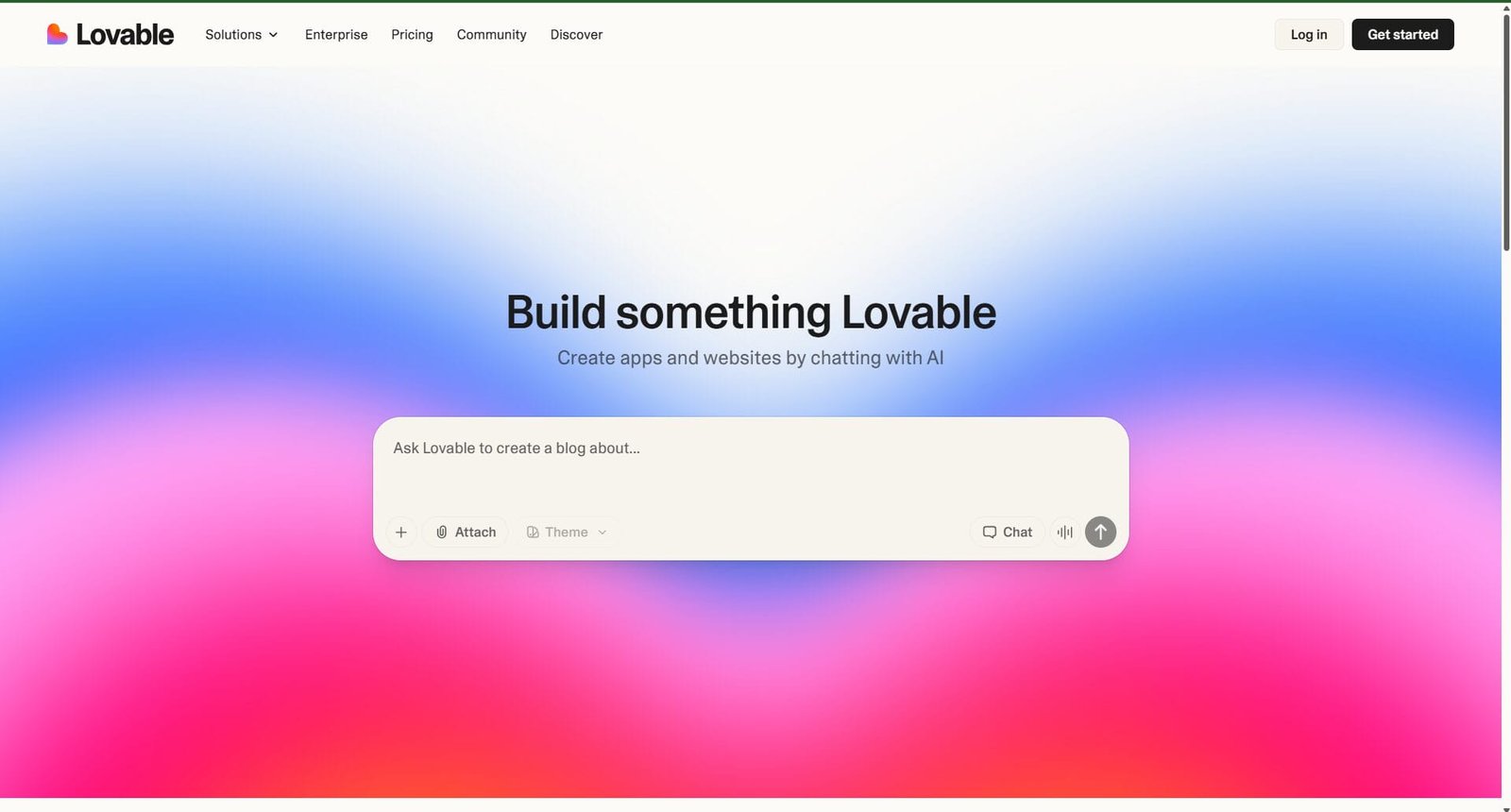
If you’re a founder trying to go from idea to product UI without getting stuck in design tools, Lovable AI feels different in a good way.
Lovable AI doesn’t start by asking what font you like or how many sections your homepage needs. It starts by asking what you’re building.
And that shift matters.
Instead of just creating a landing page, Lovable AI helps you generate:
- Product layouts
- Page structures
- Dashboard-style interfaces
- Clean UI flows for MVPs
This makes it especially useful for:
- SaaS founders
- Solo founders
- Non-technical founders building their first product
What stands out is how product-focused the experience feels. You’re not designing. You’re assembling a working version of your idea.
That said, it’s important to be realistic. Lovable AI is excellent for MVPs and early product UI, but advanced backend logic still requires additional tools or developers later on.
Best use case:
If your product idea is stuck in your head or in Figma, Lovable AI helps you bring it to life fast.
Founder takeaway:
If your goal is to ship something usable instead of debating layouts, Lovable AI is worth trying.
#2 Framer AI – When Your Landing Page Needs to Convert
Having a product idea (and even an MVP) is only half the battle, and then you have to explain it.
That is where Framer AI comes into play.
Framer is suitable for:
- Marketing Websites
- Landing pages for start
- Product Launch Pages
It generates beautifully designed pages with a sense of contemporary purpose. Animation, space, and responsiveness just work.
Many founders rely on Framer AI together with product tools like Lovable AI:
- Framer for the public site
- Lovable for the actual product UI
Best Use Case:
When You Have the Product but Your Site Does Not Communicate It Well.
#3 Webflow AI – More Control for Growing Startups
Webflow AI is usually the option when the start-up feels more serious about the venture.
It offers:
- AI-assisted layout
- CMS support
- Effective SEO management
In contrast to more basic tools, Webflow provides more flexibility; however, the price for this flexibility is more time and learning.
Best Use Case:
Founders looking to be flexible or to scale their content or pages eventually.
#4 Durable AI – A Website in One Sitting
Durable AI is refreshingly simple.
You answer a few questions, and within minutes, you have:
- A business website
- Basic copy
- Contact sections
It’s not meant for complex products but that’s the point.
Best use case:
Founders who need something online today and don’t want decisions slowing them down.
#5 Softr – Turning Data Into Products
Some products don’t start as apps. They start as spreadsheets.
Softr helps founders build:
- Internal tools
- Member portals
- Dashboards
by connecting directly to data sources like Airtable or Google Sheets.
Best use case:
Operational products, admin panels, or client-facing portals without heavy logic.
#6 Bubble AI – Power With a Learning Curve
Bubble AI gives founders a lot of power.
You can build:
- Logic-heavy apps
- Workflow-driven products
- Database-backed systems
But there’s a trade-off.
Bubble can feel overwhelming at first. It’s powerful, but it asks for your time.
Best use case:
Founders willing to invest time to avoid hiring engineers early.
#7 Typedream AI – Simple, Clean, and Lightweight
Typedream AI feels as if it were Notion for websites.
Its:
- Easy to edit
- Clean design
- Quick to publish
Some independent entrepreneurs use Typedream for:
- Personal startup websites
- Side projects
- Idea Validation Pages
Best use case:
When you need simplicity rather than complexity.
How Founders Actually Combine These Tools
Founders hardly ever use a single tool. They create stacks.
Some typical configurations are:
- MVP build: Lovable AI + Supabase
- Launch location: Framer AI + analytics
- Internal tools: Softr + Google Sheets
- No-code SaaS: Bubble + Stripe
The objective is not perfection.
The aim is momentum.
Final Thoughts: Build Faster, Learn Sooner
Your first product doesn’t need to impress everyone.
It just needs to exist.
AI tools won’t replace founders. But they do remove unnecessary delays design debates, setup fatigue, and technical roadblocks.
If you’ve been waiting for the “right time” to build, tools like Lovable AI make this the best time.
Ship early. Learn fast. Adjust often.
That’s how real products are built.